

Your shopping cart is empty
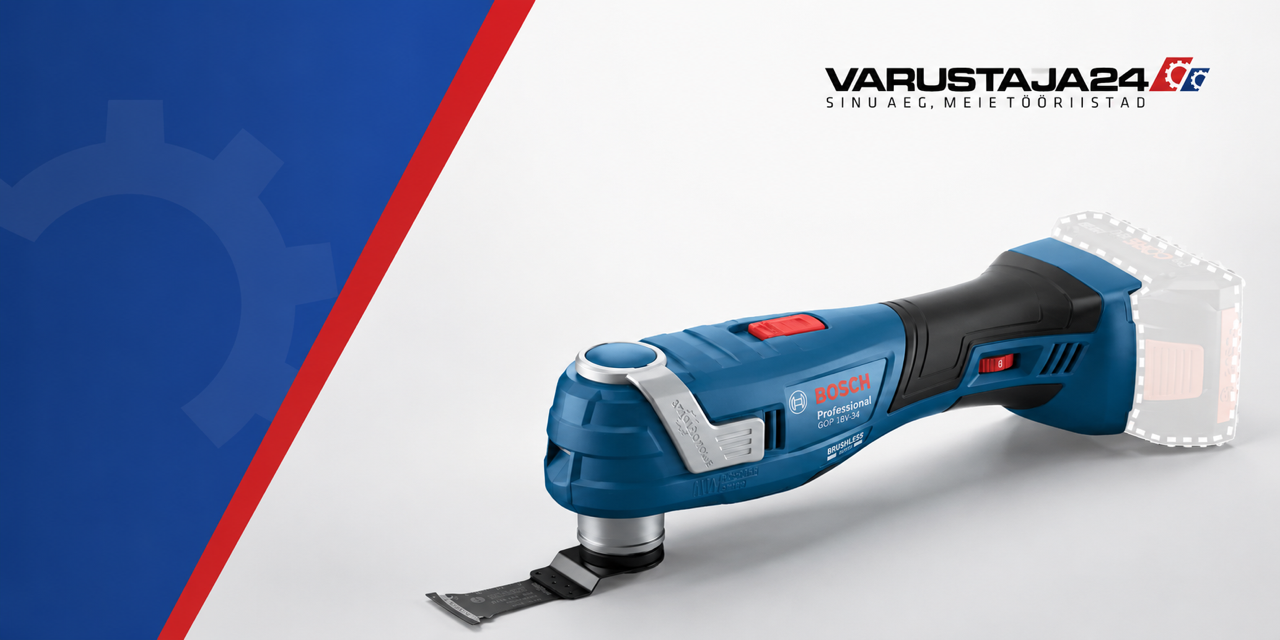
Multi-tool – one tool for dozens of different jobs
An oscillating multi-tool is one of the most versatile power tools you can have, suitable for construction, renovation, installation and smaller repair jobs. As the name suggests, its greatest advantage is its versatility. Depending on the accessory fitted, a single tool can cut wood and metal, sand, scrape, remove grout and make precise cuts in places that are difficult to reach with larger power tools.
This is exactly why a multi-tool is one of those tools whose true usefulness often becomes clear only after you have used it for a while. The more different jobs you encounter, the more uses you find for it
Precise cuts where other tools cannot reach
One of the biggest advantages of an oscillating multi-tool is its ability to make highly precise cuts. Unlike many saws, a multi-tool can make plunge cuts directly into the material, meaning you do not have to start cutting from an edge.
This is particularly useful when cutting an opening in drywall for an electrical socket or switch, cutting furniture panels or creating various openings and penetrations. If you need to make a small, precise opening in a wall or piece of furniture for a cable, pipe or another component, a multi-tool allows you to work with control and remove only the material that is necessary.
The same feature makes a multi-tool an excellent choice for renovation work. If only a small section of a floor, wall or other structure is damaged, it can be cut out precisely without having to remove a larger area of the surrounding material.
A multi-tool can save a lot of time when installing flooring
A multi-tool is particularly useful when installing laminate, parquet and other types of flooring. One classic example is trimming door frames. When installing a new floor, the flooring often needs to fit neatly underneath the door frame. A multi-tool allows you to cut the frame at exactly the right height and slide the flooring underneath it.
The same tool can also be used to adjust already installed skirting boards or make precise cuts in flooring materials. Because the blade works with an oscillating motion and the machine itself is relatively compact, it can be used close to walls, corners and other obstacles.
Removing old silicone, adhesive and other materials
A multi-tool is much more than just a saw. With the right scraper attachment, it becomes a highly effective tool for removing a variety of old materials.
Renovation work often involves removing old silicone, dried adhesive, paint, varnish or adhesive left underneath flooring. Doing this manually can take a considerable amount of time, while a multi-tool fitted with the right scraper can significantly speed up the process.
It is especially useful when the old material is firmly attached to the surface. Instead of spending a long time scraping it away by hand, the oscillating movement of the tool does much of the hard work for you.
A useful tool for tiling work
Special accessories are also available for removing grout between tiles, making the multi-tool useful when renovating bathrooms, kitchens and other tiled areas.
For example, if a single tile is damaged and needs to be replaced, the grout surrounding it first needs to be removed. A multi-tool allows this to be done accurately and with good control. Old grout can also be removed when the tiles themselves are still in good condition but the joints need refreshing.
Sanding corners and tight spaces
A dedicated sander is normally the best choice for sanding, but larger machines cannot always reach every area. The triangular sanding pad of a multi-tool makes it possible to work in corners, along edges and close to other details.
This is particularly useful when renovating window frames, furniture, stairs and various wooden components. Larger surfaces can be sanded with a conventional sander, while the tightest areas can be finished with the multi-tool. This reduces the need for manual sanding in awkward corners and helps achieve a more consistent finish.
A multi-tool can cut metal too
With the correct blade, a multi-tool is not limited to cutting wood and plastic. A suitable metal-cutting blade can be used to cut through nails, screws, small metal profiles and other metal components.
This feature is particularly useful during renovation and demolition work. When dismantling an old structure, you may encounter a nail or screw that cannot easily be removed. With a multi-tool, it can simply be cut flush with the surface so that the work can continue.
It is important to remember that the capabilities of a multi-tool depend heavily on the accessory being used. Different blades and accessories are designed for wood, metal, plastic, grout and other materials, so choosing the right accessory for the job is essential for achieving the best result.
Why should you have a multi-tool in your toolbox?
The greatest strength of a multi-tool is not that it replaces every other power tool. A dedicated sander is still better for large surfaces, while a circular saw or jigsaw is more suitable for making long cuts. A multi-tool becomes particularly valuable when a conventional tool cannot perform the job easily or precisely enough.
One moment you can use it to cut an opening in drywall, the next to trim a door frame, then remove old silicone and a few minutes later cut through a screw that is in the way. Change the accessory and the purpose of the tool changes with it.
That is why an oscillating multi-tool is an excellent addition to the toolbox of professional builders, installers and renovators, as well as anyone carrying out DIY renovation work at home. It is a compact tool capable of solving a surprisingly wide variety of tasks.
There is one simple principle that sums up the multi-tool perfectly: the more you use it, the more uses you find for it.